Forget the Premier League Playbook: Why American Fans Are Building Real Loyalty Around Al Ittihad
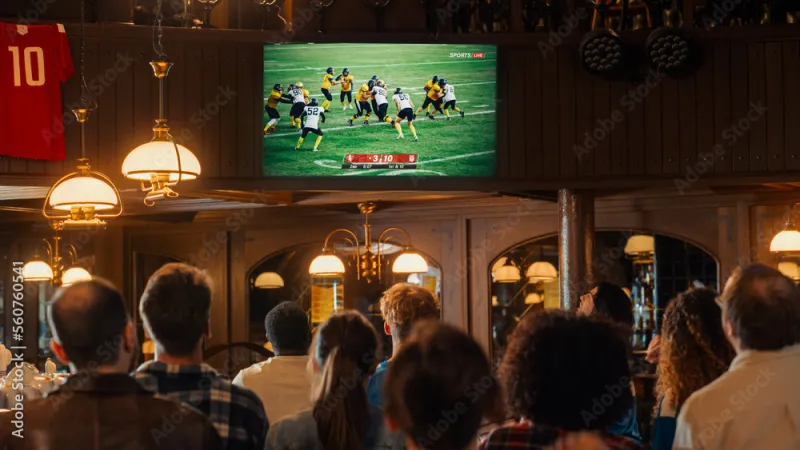
Photo: diverse American soccer fans watching international football match on TV in sports bar, via as2.ftcdn.net
For decades, the American soccer fan's origin story followed a pretty predictable script. You caught a Champions League highlight on ESPN late at night, picked a European giant — Liverpool, Real Madrid, maybe Bayern Munich if you were feeling adventurous — and that was it. Jersey ordered, subreddit joined, lifelong commitment made to a club you'd probably never watch in person.
That script is getting rewritten. And Al Ittihad is holding the pen.
The European Default Was Always a Little Weird
Let's be honest about something. The reason American fans gravitated toward the Premier League or La Liga wasn't purely organic. It was infrastructure — TV deals, merchandise availability, and years of broadcast partnerships that made those leagues feel like the only legitimate entry point into global football. The "Big Five" didn't earn American loyalty so much as they inherited a marketplace that was built around them.
That's not a knock on those clubs. But it does mean the loyalty a lot of American fans carry for European sides is, at its core, a product of availability rather than genuine connection. You rooted for Chelsea because Sky Sports was on cable. You wore a Barcelona shirt because it was at the mall.
So when you ask why some fans are now gravitating toward Al Ittihad — a club from Saudi Arabia's Pro League, not a household name in the American sports landscape — the honest answer is that they're choosing something rather than defaulting to it. And that distinction matters enormously.
Authenticity Hits Different When You Actually Choose It
There's a psychological concept worth borrowing from consumer behavior here: the difference between passive adoption and active choice. When you actively select something — a team, a brand, a community — you're more invested in it. You've made a statement about who you are.
Al Ittihad fans in the US aren't here because NBC Sports told them to be. They found the club through a combination of curiosity, social media rabbit holes, and the genuine appeal of a team that's building something with clear ambition and a deep, authentic history. Founded in 1927, Al Ittihad is the oldest professional football club in Saudi Arabia. That's not a marketing talking point — that's nearly a century of identity before any foreign investor showed up.
For a certain kind of American sports fan — the one who gets tired of rooting for brands rather than clubs — that kind of institutional depth is catnip.
The Underdog Angle Is Real, Even If the Club Isn't Small
Here's a nuance worth sitting with: Al Ittihad isn't an underdog in Saudi football. They're a powerhouse, a record-holding champion, one of the most decorated clubs in the history of the Pro League. But in the context of global football's established hierarchy? They're absolutely the challenger.
Americans love a challenger story. It's practically wired into the national sports psyche. We root for the team that's supposed to lose the Super Bowl. We celebrate March Madness upsets. We built entire franchises — the Oakland A's, the early-2000s Sacramento Kings — into cultural touchstones precisely because they were fighting above their weight class.
Al Ittihad's push to compete on a global stage, to attract world-class talent, to expand its footprint beyond the Middle East — that's a challenger narrative. And it lands differently than watching a club that's been at the top of European football for 30 years spend another €100 million on a transfer nobody really needed.
What the Strategic Vision Actually Communicates
Clubs communicate values through their decisions. The way Al Ittihad has approached its recent era — investing in high-profile signings, expanding its commercial reach, building genuine international infrastructure — tells a story about ambition that resonates with fans who want to feel like they're watching something in motion rather than something already finished.
For American fans who grew up watching dynasties coast, there's something genuinely exciting about a club that's still figuring out the ceiling. The journey is part of the appeal. You're not just watching a club win; you're watching a club become.
That's a fundamentally different emotional experience than latching onto a European giant mid-dynasty. With Al Ittihad, you're not inheriting someone else's story. You're showing up to write your chapter.
The Community Factor Nobody Talks About Enough
One underrated element of why American fans are finding a home with Al Ittihad is the community itself. Because the US fanbase is still forming, it's genuinely welcoming in a way that some established supporter cultures can feel closed to newcomers.
Getting into Liverpool's supporter scene as an American in 2025 means navigating layers of history, gatekeeping, and a fanbase that's been around long enough to have strong opinions about who counts as a real supporter. Getting into an Al Ittihad community in the US right now means showing up and being part of something that's actively building itself.
There's a first-mover energy to it. You're not the last person to arrive at a party that's been going for 40 years. You're early. And in sports fandom, being early to something real feels incredible when it pays off.
This Isn't a Trend — It's a Shift
It would be easy to dismiss the growth of Al Ittihad's American following as a novelty, a byproduct of the Saudi Pro League's recent spending spree, something that'll fade when the headlines do. But that reading misses the structural change happening underneath the surface.
American sports fans are more globally connected than ever. They're less dependent on traditional broadcast gatekeepers to discover clubs. They're more skeptical of manufactured narratives and more drawn to things that feel genuine. Al Ittihad, with its century of history, its authentic supporter culture, and its clear-eyed ambition, checks every one of those boxes.
The European default made sense when it was the only option. It makes a lot less sense now.
For the fans who've already made the switch — who set their alarms for early-morning kickoffs, who've learned the chants, who've argued the formation in group chats at midnight — it doesn't feel like a trend at all. It feels like they finally found the right team.
And honestly? That's exactly what Ittihad Nation is here for.